
Modern Cost-Reduction Tools Training Course
An advanced training program focusing on modern cost optimization strategies, including Activity-Based Costing (ABC), deviation analysis, and strategic decision-making for long-term cost reduction.
Course overview
In an increasingly competitive global market, the ability to control and reduce costs is the primary driver of corporate profitability and sustainability. The Modern Cost-Reduction Tools Training Course is designed to transition participants from basic cost accounting to advanced cost optimization and strategic decision-making. This program provides a deep dive into the mechanisms of cost behavior, enabling professionals to identify non-value-added activities and implement surgical reductions that protect the bottom line without compromising quality.
The curriculum is structured to address the critical intersection of cost accounting and management strategy. Participants will master the classification of costs based on financial and management accounting perspectives, allowing for more effective control, planning, and performance evaluation. A significant focus is placed on standard control—analyzing deviations in materials, wages, and indirect costs—to provide a clear roadmap for operational efficiency. By mastering the analysis of semi-variable and fixed costs, attendees will gain the analytical rigor needed to drive continuous cost reduction across all departments.
Beyond traditional accounting, this course introduces the revolutionary Activity-Based Costing (ABC) system. By identifying specific cost drivers and mapping them to activities, participants will learn how to uncover hidden costs that traditional systems often mask. The program explores how to perform comparative analyses between traditional and modern systems, ensuring that organizations can choose the model that best fits their operational realities. This knowledge is essential for modern managers tasked with making high-stakes decisions, such as “make-or-buy” assessments, capacity expansion, or the closure of underperforming distribution branches.
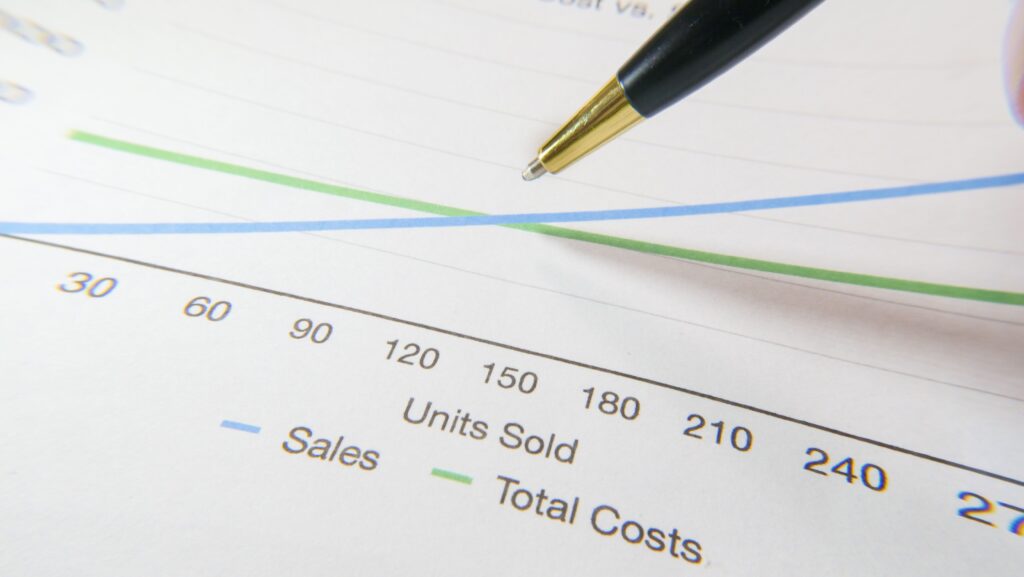
Through a series of comparative case studies and graphical interpretations of cost behavior, trainees will develop the ability to present complex financial data clearly to stakeholders. Whether working in manufacturing or service-oriented sectors, participants will finish this course equipped to design cost reports that facilitate sound strategic decision-making, ensuring their organizations remain agile and competitive in any economic climate.
How can I implement modern cost-reduction tools like Activity-Based Costing (ABC)?
You can reduce costs by implementing an Activity-Based Costing (ABC) system to identify precise cost drivers, performing rigorous standard deviation analysis on materials and labor, and applying strategic cost-benefit analysis to decision-making processes like "make-or-buy" or capacity expansion.
Who is this course for?
Cost Accountants and Financial Controllers
Operations and Production Managers
Business Analysts and Strategists
Department Heads and Financial Decision-Makers
Professionals in Manufacturing or Service Industries
Why this course matters
Identifies "hidden" costs that traditional accounting systems fail to track.
Provides a scientific basis for high-level management decisions.
Improves operational efficiency through systematic deviation analysis.
Offers a comprehensive comparison between traditional and modern (ABC) cost systems.
Enhances the strategic value of cost reporting for executive stakeholders.
Key takeaways
- Mastery of standard control and variance analysis for direct and indirect costs.
- Ability to interpret and visualize cost behavior graphically.
- Strategic framework for deciding whether to make components in-house or outsource.
- Comprehensive understanding of ABC implementation in both manufacturing and service sectors.
- 12 months of free access to interactive recorded virtual lectures.
Needs and problems addressed
- Inefficient resource allocation due to reliance on outdated, traditional cost systems.
- Inability to pinpoint which activities are driving the highest operational costs.
- Strategic decision-making based on incomplete or misunderstood cost data.
- High levels of waste and uncontrolled deviations in production/operational processes.
- Lack of clarity in cost reporting regarding variable vs. gross theory outcomes.
Tools and methods
- Activity-Based Costing (ABC) Framework
- Standard Costing and Variance Analysis
- Cost-Volume-Profit (CVP) Analysis
- Gross, Variable, and Exploited Cost Theories
- Strategic Decision-Making Matrices
Related professional roles
- Cost Management Consultant
- Operations Controller
- Strategic Finance Manager
- Manufacturing Cost Analyst
- Business Efficiency Manager
Official references
Course highlights
What this course is
A 25-hour professional program covering cost classification, variance analysis, and modern tools like Activity-Based Costing (ABC) for strategic cost reduction.
Who it is for
Cost accountants, financial controllers, operational managers, and business analysts.
What you will learn
Learners will master how to implement ABC, analyze direct/indirect cost deviations, and use cost data to drive strategic business decisions.
Expected outcome
The ability to execute a full cost-reduction strategy, accurately report on cost theories, and earn a professional training certificate.
Beginner suitability
It is best suited for those with a basic understanding of accounting principles looking to level up their strategic cost management skills.
Why American Board
Accreditation provides international recognition of your proficiency in contemporary management accounting practices.
Certificate summary
Graduates receive the "Costs Reduction Tools Training Course" certificate after fulfilling 75% attendance and active participation.
Is this course right for you?
Course benefits
- Professional certificate from the American Board.
- Practical experience in implementing ABC systems.
- Comparative frameworks for traditional vs. modern cost estimation.
- 12 months of free access to all recorded training sessions.
Target audience
- Cost Accountants
- Operational Managers
- Financial Strategists
- Cost Accountants and Financial Controllers
- Operations and Production Managers
- Business Analysts and Strategists
- Department Heads and Financial Decision-Makers
- Professionals in Manufacturing or Service Industries
Who should choose another path?
Individuals seeking to learn fundamental bookkeeping or basic introductory accounting, as this is an advanced management-focused program.
Availability and registration
Available countries and regions
Registration notes by country
Available globally online; cost accounting principles are universal, and ABC is widely applied in international business practices.
Certificate, accreditation and training team
Course schedule and training providers
Choose the provider and venue that best suit you. Fees and availability may differ by intake.
| Country | Training provider | Venue | Fee |
|---|---|---|---|
| Egypt | American Board for Professional Training | General | 150 USD |
Learning outcomes
- Classify costs effectively to serve planning, control, and decision-making objectives.
- Analyze deviations in direct materials, wages, and overheads to drive performance.
- Implement an Activity-Based Costing (ABC) system from planning to execution.
- Use cost-based decision-making for complex issues like branch closure or product outsourcing.
- Create and interpret professional cost reports under gross, variable, and exploited theories.
Curriculum
Introduction to Costs
Understanding cost accounting objectives, classification for management accounting, and quantity accounting behavior.
Cost Rationalization
Utilizing standard control, analyzing deviations (materials, wages, overheads, profit), and the cost tab.
Cost Reporting
Reporting techniques under gross, variable, and exploited theory approaches; graphical interpretation of cost behavior.
Costs and Decision-Making
Strategic analyses: make-or-buy, production line continuation, capacity expansion, and by-product management.
Modern Cost Systems
Implementation of Activity-Based Costing (ABC), cost drivers, and comparative analysis of ABC vs. traditional systems.
Projects and practical work
- Activity-Based Costing (ABC) Implementation Project: Building an ABC model for a simulated service organization to identify cost drivers.
- Variance Analysis Workshop: Analyzing a dataset of actual vs. standard costs to isolate inefficiencies in direct wages and materials.
- Decision-Making Simulation: Evaluating a corporate scenario involving the potential closure of a distribution branch and manufacturing vs. outsourcing parts.
- Cost Behavior Visualization: Creating a set of graphical interpretations to present cost trends to senior management.
Prerequisites
- Foundational knowledge of financial or management accounting.
- Familiarity with standard business operational processes.
- No advanced mathematical background is required; focusing on logic and strategic application.
Certificate and accreditation
Participants receive this certification upon successful attendance of 75% of total training course hours and active participation in lecture discussions.
Express your interest
Submit your details and the course team will contact you about the schedule you select.
We invite finance professionals and operational managers to complete the registration form below. Please ensure your details are correct to secure your spot and facilitate the prompt issuance of your American Board accredited certificate upon completion.
Frequently asked questions
How does ABC differ from traditional systems?
Traditional systems often allocate overhead based on simple volume, whereas ABC allocates costs based on actual activities and their drivers, providing much higher accuracy.
Will we learn how to make specific strategic business decisions?
Yes, the course includes a dedicated module on using cost data for decisions like "make vs. buy," capacity expansion, and closing branches.
Is this course useful for non-manufacturing companies?
Yes, the program includes a specific case study on applying ABC in service-oriented companies, where cost drivers are often less visible.
What happens if I miss a lecture?
All interactive virtual lectures are recorded and provided to registered trainees, with free access for 12 months following the course.
What is the requirement for receiving the certificate?
You must meet the 75% attendance threshold and engage actively with the lecturer during the sessions.